Introduction:
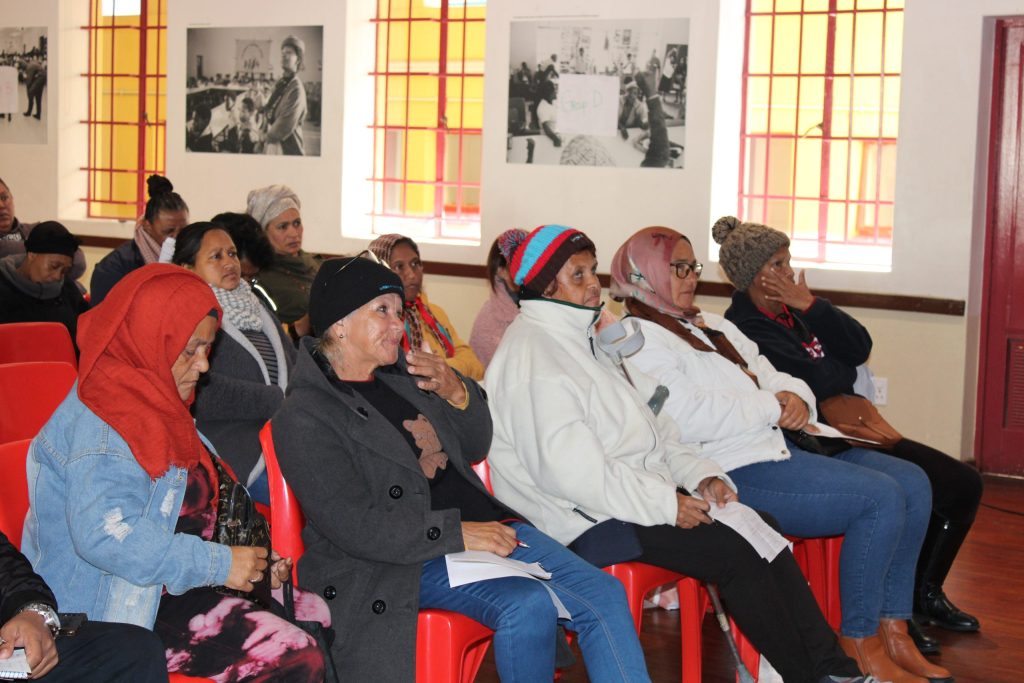
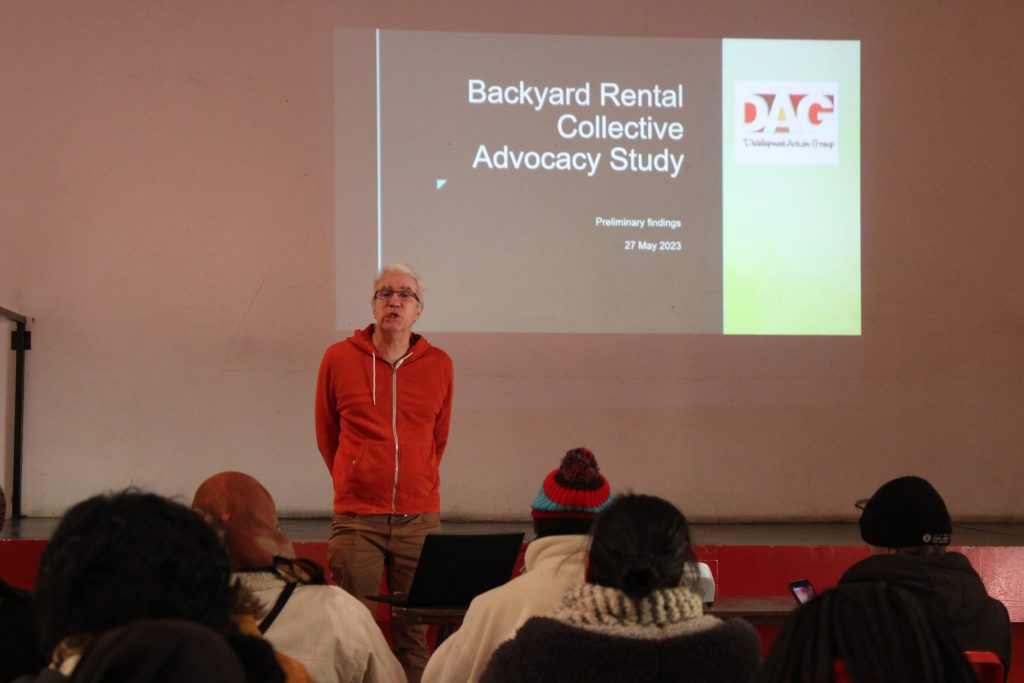
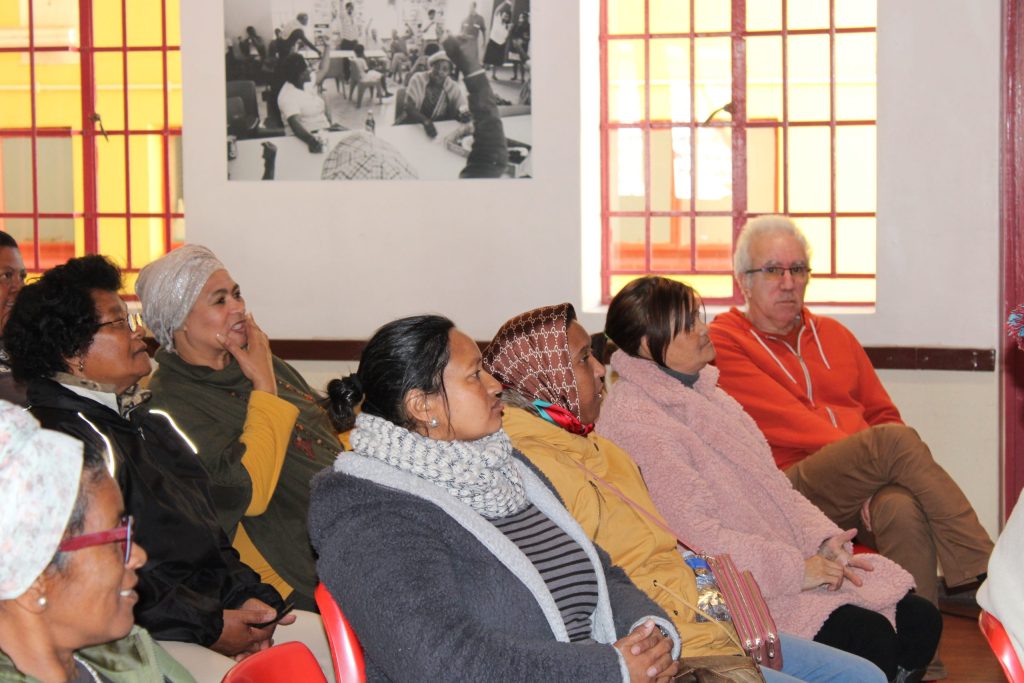
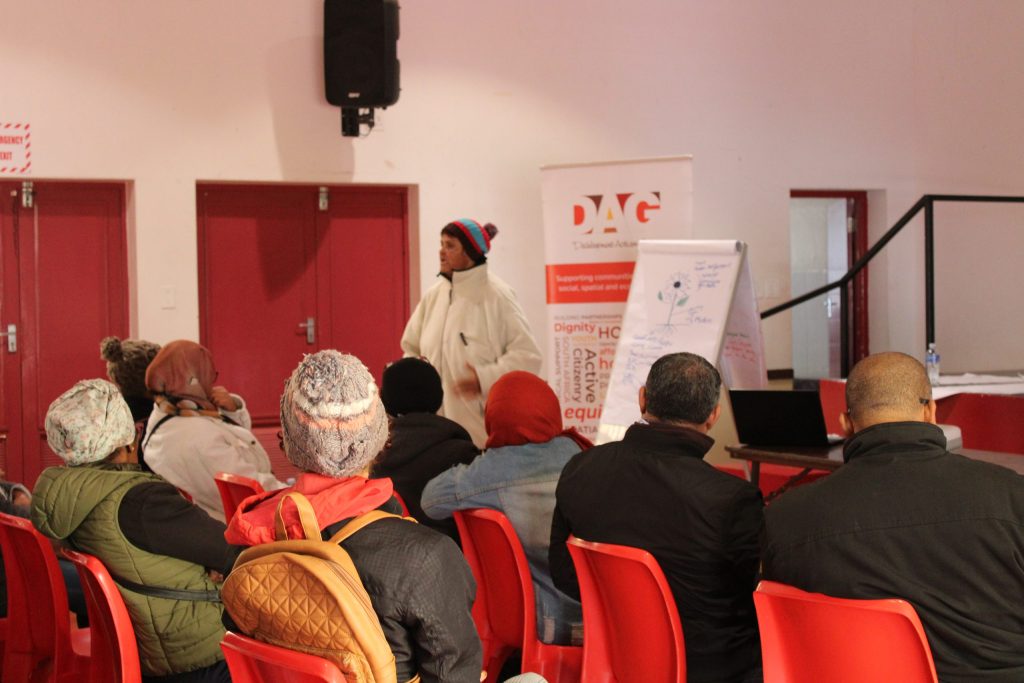
Backyards are more than just spaces behind houses; they are vibrant communities but face numerous challenges. Working together and speaking with one voice can make a significant difference. In May this year, community representatives from Bellville South, Maitland Garden Village, Mitchell’s Plain, Eerste River, Manenberg, Bluedowns, and Bonteheuwel joined the Development Action Group (DAG) on a collective advocacy journey. DAG’s backyard matters team hosted the collective advocacy workshop aimed at addressing priority issues affecting both backyard tenants and landlords across different communities and strengthen their collective bargaining power.
In this blog post, we will delve into the key challenges faced by backyard communities and explore the importance of collective action in creating sustainable change. Working together and speaking as a united front can make a significant difference compared to individuals tackling challenges alone. Let’s take a closer look.
The Challenges:
Backyard communities have experienced significant organic growth over the years, resulting in overcrowding, limited access to basic services, and poor living conditions. Overcrowding is a significant problem in backyard communities where many households share a single room or dwelling, leading to issues such as poor living conditions, limited privacy, and inadequate ventilation. During a visit to Maitland Garden Village, we observed a property with 25 people living on one (1) Erf/property consisting of six (6) backyard structures with only one brick and mortar dwelling, while the rest were backyard structures. Backyard tenants often rely on their landlords to access essential services, creating tensions and uncertainties regarding tenure and service usage. Furthermore, government policies and standards fail to capture the complexities of the backyard sector, and there have been limited engagements with these communities to understand their specific issues.
Government Engagement and Policy Review:
Although the government acknowledges the existence of the backyard sector, extensive engagements with backyard communities to understand their specific issues have been lacking. Existing norms and standards fail to fully grasp the nuances and complexities of the backyard sector, resulting in inadequate responses. Policy reviews often occur without the input of relevant and affected communities. To address these shortcomings, a comprehensive and sustainable approach is necessary, one that actively engages with and plans alongside backyard communities to improve their living conditions.
Collective Bargaining and Advocacy:
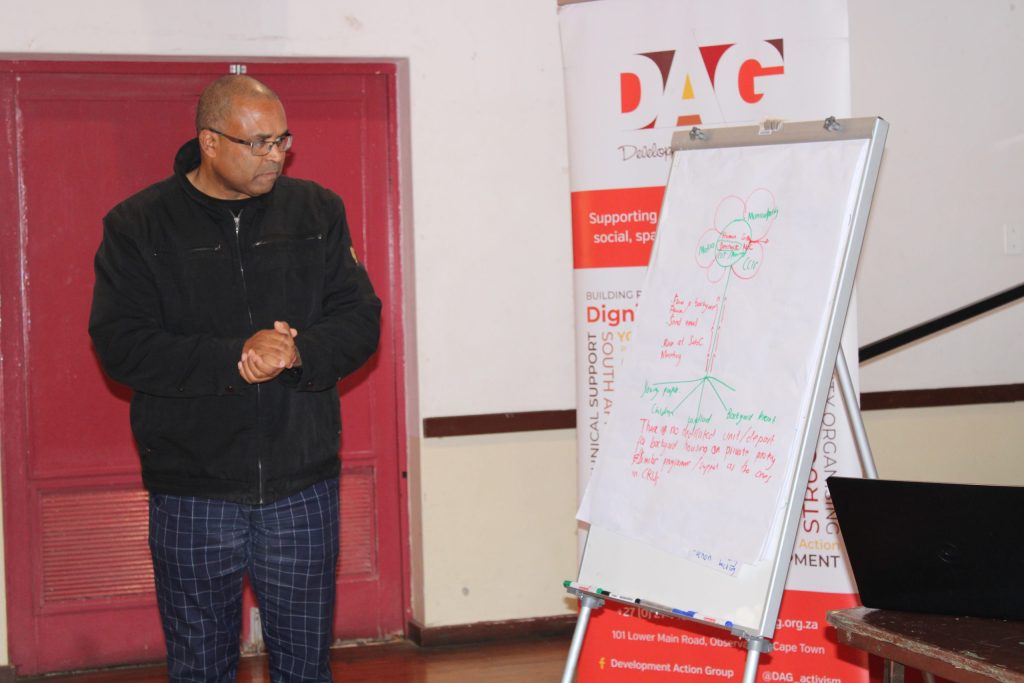
DAG is committed to supporting the strengthening of collective bargaining opportunities for backyard communities. To this end, a consultant was appointed to help these communities develop an advocacy tool that addresses their specific issues and facilitates the creation of an action plan. The development of this tool involved focus group discussions with backyard tenants and landlords, as well as interviews with community-based organisations and Non-Governmental Organisations (NGOs) such as Isandla Institute and Community Resource Centre (CORC). By engaging in collective action, backyard communities with shared concerns can unite and amplify their voices to draw attention to and address the issues affecting them.
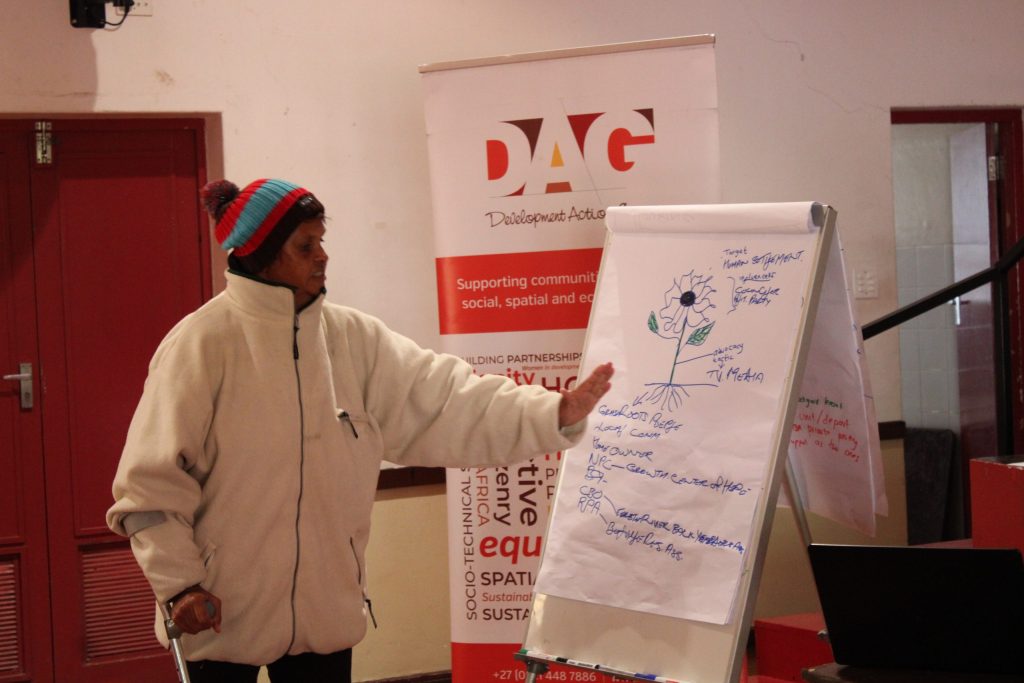
During a recent workshop, the consultant, Adrian, presented the findings from focus group discussions and interviews. These discussions revealed that building a broad backyard movement has historically faced challenges, including geographical distances between communities and resistance from landlords. However, it is crucial to acknowledge these obstacles while recognising that strong leadership and community ownership are essential for successful collective advocacy. The discussions also highlighted tenants’ lack of knowledge about their rights and responsibilities, underscoring the importance of the rental housing tribunal in this sector.
Feedback and The Way Forward:
The second part of the workshop focused on gathering feedback and incorporating additional findings. It also empowered participants with advocacy tools that could be employed to address specific issues. These tools served as an outline for the backyard tenants and landlords, detailing the steps they would take to tackle their challenges effectively. The workshop also emphasised the need for collective advocacy among backyard tenants and landlords, highlighting the importance of speaking in a unified voice. The development of the collective advocacy tool in collaboration with representatives from various communities is underway.
Conclusion:
Strengthening backyard communities requires collective action, and a unified voice. Through the collaborative efforts of backyard tenants and landlords, lasting change can be achieved. Stay tuned for updates on the progress of the collective advocacy tool, developed in consultation with representatives from diverse backyard communities. By speaking with a unified voice, these communities can make a difference and improve their circumstances.