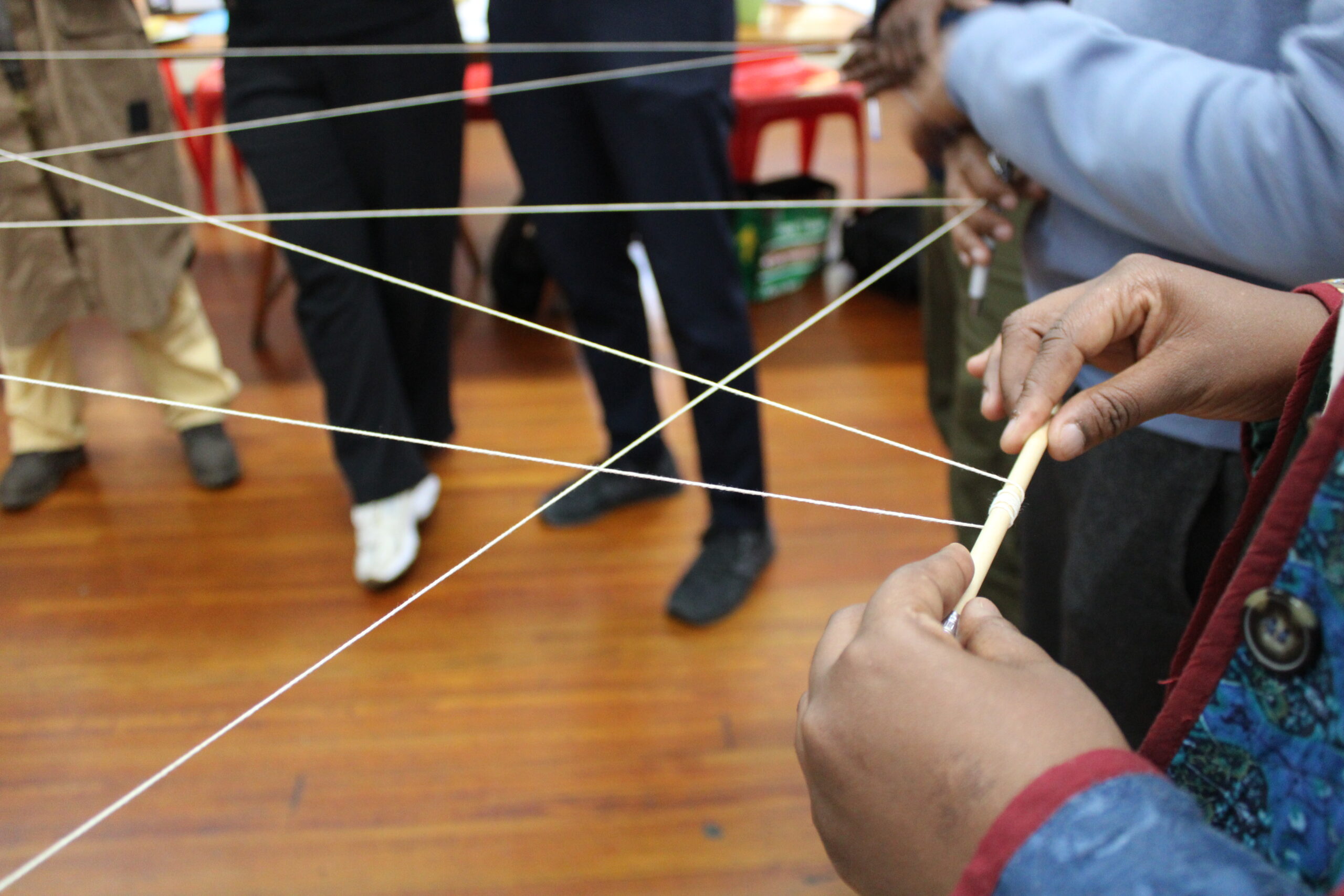
From the 23rd to the 25th of April, Habitat International Coalition (HIC) and Abahlali Basemjondolo co-hosted the in-person exchange of social and feminist movements. The theme of the exchange was “Building our collective agenda and action for habitat-related human rights.” Cape Crisis Committee Chairperson (CCC) Latifah Jacobs, and Development Action Group Project Officer, Vuyokazi Hlwatika attended this exchange and reflect on this enriching experience.
As part of the social production of habitat (SPH) and people’s power session, Vuyokazi presented on the work Asivikelane does on social audits and budget advocacy in Knysna and Cape Town. This highlighted community-led interventions on service delivery, gender-responsive procurement, and how communities could play a more active role in municipal badgemaking processes.
Vuyokazi shares her insights:
A significant highlight for me was seeing how different kinds of organisations in different parts of the world responded to similar land and housing issues. While those in Germany were working to draft new laws limiting the number of rental units a single landlord can own, in Brazil, women self-organised to upgrade favellas into homes with shared facilities framing housing as a gateway to all other rights. I was also interested in the feminist approaches taken by Abahlali Basemjondolo in educating women on the different types of marriage contracts, the importance of having legal agreements in place for cohabitation as well as drawing up wills even if one is not wealthy. Each social movement is finding, refining and adapting solutions to their local context using the knowledge and resources they have.
Latifah Jacobs shares:
Participating in the three-day in-person convergence was a deeply enriching experience that broadened my understanding of how social and feminist movements around the world address housing struggles. It was a space of shared learning, solidarity, and global connection.
What stood out most was the diversity of voices and strategies presented. Asma and Maha shared powerful testimonies from Gaza, highlighting both the devastating challenges and the extraordinary resilience of women navigating crisis and occupation. Their courage left a lasting impression. From Berlin, an activist shared how their work centers on shifting policy frameworks and urban planning systems—showing that change can also come from within the structures we’re often excluded from.
Insights from Brazil deepened the conversation on grassroots organizing, while Hilary’s reflections on Zimbabwe’s People’s Land Rights Movement reminded us that land justice remains a critical, ongoing fight across the continent.
Locally, I was inspired by the grounded work being done in Durban by Groundwork and the rich history and continued activism of Abahlali baseMjondolo (AbM). Marching in the Unfreedom Day protest was a highlight, reinforcing how symbolic actions, when rooted in people’s lived realities, can drive powerful narratives and collective strength.
Engagements with Reclaim the City and Ndifuna Ukwazi in Cape Town, along with the Durban Coalition, added critical legal, urban, and grassroots perspectives. Hearing from Massa Kone of HIC Mali offered a Pan-African lens, connecting rural struggles with urban housing justice. The contributions of Lauren and her team from SERI were also invaluable, especially in showcasing how legal strategies can complement community action.
The presence of Tecnológico de Monterrey from Mexico brought a research and academic perspective to the space, enriching our understanding of how knowledge production can support activism.
Overall, the convergence left me feeling more informed, energized, and connected. It sharpened my desire to focus more on data capture, research that solves real problems, and policy advocacy that uplifts the voices of those most affected. I am grateful to DAG and HIC for including the Cape Crisis Committee and look forward to continued collaboration.
*Photographs by Matthew Jordaan